What Are the 2026 Top Clay Tile Types for Global Buyers?
For global buyers, choosing the right clay tiles in 2026 requires more than comparing colors and catalog prices. Roof pitch, climate, installation skills, and shipping distance can change the final decision. Traditional plain tiles remain popular for heritage homes and compact residential projects. Interlocking clay tiles offer faster installation and improved weather resistance. Roman and Spanish profiles still attract buyers seeking stronger visual character. Flat, extruded, and handmade options serve different architectural and budget needs.
Details matter. A buyer should examine water absorption, freeze-thaw performance, breaking strength, dimensional consistency, and surface finish. Ask for current test reports, batch samples, and installation guidance. Standards such as ASTM or EN references can support a more reliable comparison, but they do not replace local building requirements. The same tile may perform well in southern Europe and fail in a severe freeze zone without proper specification. Freight packaging also deserves attention. A cracked corner inside a wooden crate can create unexpected replacement costs.
Experience teaches caution.
Factory photographs may look perfect. Real batches can vary slightly in shade, texture, and curvature. That variation is sometimes attractive, but it must be disclosed before ordering. Buyers should compare lifecycle value, not only the container price. A durable tile, compatible underlayment, and skilled installation may reduce maintenance over decades. Still, no single type suits every market. This guide reviews the leading clay tile categories for 2026, while recognizing that climate data, supplier performance, and project priorities can change the ranking.
Clay Tile Basics and Their Role in Global Roofing
What Are the 2026 Top Clay Tile Types for Global Buyers?
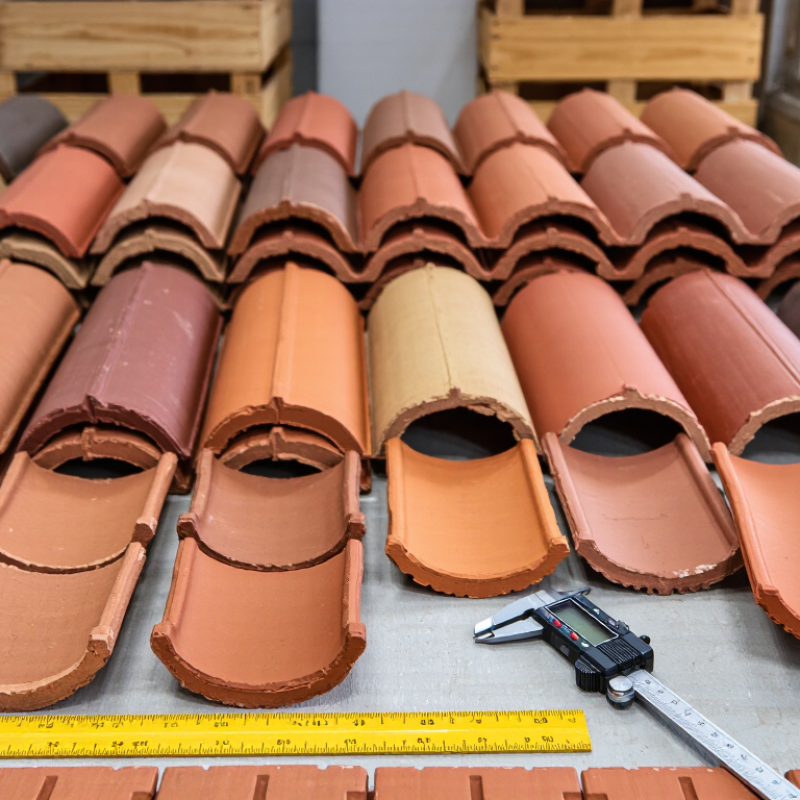
Clay tiles begin with natural clay, water, shaping, drying, and high-temperature firing. This process creates a hard, weather-resistant roofing unit with a warm, earthy appearance. Their color may deepen or change slightly over time. That variation is part of the material’s character.
Common profiles include flat tiles, barrel tiles, S-shaped tiles, and interlocking designs. Flat tiles suit clean, contemporary roofs. Barrel tiles create rounded channels that help guide rainwater. S-shaped tiles provide a wave-like surface and can cover large areas efficiently. Interlocking tiles usually improve installation speed and reduce water entry risks. However, profile names and dimensions differ between regions.
Clay roofing can perform well in hot, wet, coastal, or cold climates when the design matches local conditions. Ventilation, underlayment, flashing, roof pitch, and fixing methods matter as much as the tile itself. A heavy tile system may require stronger structural support. Buyers should request tested data for water absorption, wind resistance, frost durability, and fire performance.
Roof inspections often reveal problems caused by poor detailing, not weak clay. Broken tiles can result from careless walking or extreme weather. Maintenance is still necessary. It is not maintenance-free. Global buyers should compare local building rules, freight protection, replacement availability, and installer experience. I would avoid choosing only by color or price; that shortcut often creates expensive compromises.
Key Clay Tile Types Expected to Lead in 2026
What Are the 2026 Top Clay Tile Types for Global Buyers?
Key Clay Tile Types Expected to Lead in 2026
In 2026, global buyers are likely to favor clay tile types that balance weather resistance, installation speed, and regional design. Interlocking clay tiles may lead large residential projects. Their side channels reduce exposed joints and can simplify alignment on broad roofs. Flat tiles will remain popular where clean lines and low visual weight suit modern buildings. Some buyers may underestimate underlayment quality.
Barrel and S-shaped tiles should remain strong in hot, coastal, and heritage-inspired markets. Curved profiles shed rain effectively, but they require careful spacing and secure fixing in high winds. Roman-style profiles offer a practical middle ground, combining drainage channels with a familiar Mediterranean appearance. Color stability matters. Natural firing variation can create attractive shade movement, yet it may complicate large-area matching. Experienced buyers should request test panels before approving full production. That step feels slow.
Project evidence also shows that tile choice cannot be separated from roof pitch, local rainfall, and transport conditions. Heavier traditional formats may perform well, but freight and handling can raise total installed cost. Lightweight interlocking formats often reduce labor, though their locking details deserve close inspection. Ask for water absorption, frost resistance, wind-load data, and installation guidance supported by recognized testing. Documentation is not decoration. Even so, forecasts remain imperfect. Builder feedback, climate records, and actual breakage rates may change the ranking by region.
Performance, Design, and Sustainability Comparisons
What Are the 2026 Top Clay Tile Types for Global Buyers?
For global buyers, the strongest 2026 clay tile choice depends on climate, roof pitch, labor, and design goals. Flat tiles create crisp lines and suit modern facades, but their exposed joints demand careful installation in wind-driven rain. S-shaped tiles move water efficiently and offer a softer, Mediterranean profile. Barrel tiles provide deep shadow lines and strong visual character, although their weight can increase structural demands. Interlocking profiles usually improve installation speed and weather resistance, yet replacement matching may be harder years later. No type wins everywhere.
In hot regions, clay’s thermal mass can moderate roof temperature when ventilation is designed correctly. In freeze-thaw zones, buyers should verify water absorption, frost testing, and edge durability rather than rely on appearance. Salt air also deserves attention; porous or poorly fired tiles may show surface damage sooner. Color consistency matters for large projects. Natural variation can look premium, but it may frustrate buyers expecting a uniform roof. Sample panels in daylight are more informative than catalogue images.
Sustainability comparisons should include service life, firing energy, transport distance, packaging, and end-of-life reuse. A locally made tile may reduce freight emissions, but only if quality remains stable across batches. Reclaimed clay tiles can add character and reduce raw material demand, though cleaning and grading require extra labor. I would request test reports, installation guidance, and replacement availability before approving a shipment. Small details matter. Even experienced teams can underestimate breakage during handling, especially on long routes. Better specifications do not remove every risk; they make risks visible before purchase.
What Are the 2026 Top Clay Tile Types for Global Buyers?
Performance, design, and sustainability comparison of common clay tile formats
How to read the chart: Scores use a comparative 1–10 index based on typical characteristics of each tile format. Durability reflects resistance to weathering and breakage; thermal performance reflects mass and ventilation potential; design flexibility covers shapes, profiles, and finishes; sustainability reflects long service life, recyclability, repairability, and the use of natural mineral material. Actual performance depends on climate, installation quality, firing conditions, and building design.
Indicative industry comparison for buyer education; no company or brand data included.
Regional Demand and Buying Priorities for Global Markets
For 2026, global buyers will not choose clay tiles by appearance alone. Regional climate, roof pitch, installation skills, and transport costs matter more. Flat interlocking tiles suit dense European housing, where clean lines and frost resistance remain important. In Mediterranean markets, traditional barrel and Roman tiles still perform well under intense sunlight. They also create familiar roof profiles. The Asia-Pacific region is expected to remain the largest ceramic tile market, according to Grand View Research’s 2024 Ceramic Tiles Market report. However, broad ceramic data does not perfectly represent roofing clay. That limitation deserves attention.
In coastal areas, buyers increasingly request low-water-absorption tiles, strong fastening systems, and salt-resistant finishes. In hurricane-prone regions, wind-tested interlocking profiles are more practical than loose traditional formats. Lightweight clay tiles can reduce structural upgrades, but they may sacrifice thermal mass and perceived durability. That trade-off is often overlooked. The International Energy Agency’s 2024 buildings report keeps energy efficiency central, supporting demand for ventilated roof assemblies and reflective surfaces. Yet a reflective glaze is not automatically a better environmental choice.
Procurement teams should compare whole-life performance, not only factory prices. The 2024 Global Status Report for Buildings and Construction highlights continuing pressure to reduce material-related emissions. Buyers should request recycled-content data, kiln energy information, breakage rates, and installation waste records. Local testing matters. A tile that survives laboratory frost cycles may still fail after poor fixing or repeated coastal exposure. Supplier documentation, sample inspections, and regional installer feedback remain essential buying priorities for 2026.
How to Select the Right Clay Tile for Each Project
For 2026 projects, global buyers commonly compare flat, barrel, interlocking, glazed, and handmade clay tiles. The right choice depends less on appearance than local exposure. Flat tiles suit clean, modern roofs and moderate rainfall. Barrel tiles shed water well on curved or Mediterranean-style forms. Interlocking profiles can improve installation speed and resist wind uplift when correctly fixed. Handmade tiles add texture, but their size variation demands careful setting out. Measure twice.
Start with climate data, not a catalogue image. In freeze-thaw regions, confirm low water absorption and tested frost resistance. Coastal projects need durable finishes and corrosion-resistant fixings, because salt air attacks metal components. In hot climates, ventilated batten spaces can reduce heat buildup beneath the roof. Check roof pitch, tile weight, rafter capacity, and local wind requirements before ordering. A tile that performs in southern Europe may fail on an exposed northern coast. That comparison is easy to miss.
Ask suppliers for technical sheets, installation details, test reports, and representative samples. Compare actual dimensions, coverage per square metre, colour variation, breakage allowance, and replacement availability. Glazed tiles offer stronger colour control, yet glare and surface ageing may not suit every façade. Natural clay develops variation; many buyers value it, while some projects need a more uniform field. Inspect a full-size mock-up in daylight and after rain. Experienced installers should review overlaps, valley cuts, ridge fixing, and underlay compatibility. Budgeting only the tile price is a common mistake. It is not foolproof. Keep a small reserve for future repairs.