How Long Can a Fridge Last Without Power 7 Best Tips?

When the electricity fails, a refrigerator becomes a quiet food-safety test. The answer to “how long can a fridge last without power” depends on temperature, door openings, and how full the appliance is. An unopened refrigerator generally keeps food cold for about four hours. A full freezer may hold its temperature for nearly 48 hours, while a half-full freezer may last about 24 hours.

Meredith Carothers, a food safety specialist with the USDA Food Safety and Inspection Service, offers a practical warning: “When in doubt, throw it out.” It sounds simple. It is not always easy.

This guide introduces seven useful tips for handling a powerless fridge. You will learn how to keep the doors closed, check food temperatures, protect frozen items, and identify dangerous spoilage signs. A refrigerator thermometer can provide stronger evidence than smell or appearance. Food may look normal and still contain harmful bacteria.

Think about a warm kitchen, melted ice on the freezer floor, and milk sitting above 40°F. These details matter. Do not taste food to test its safety. That shortcut can create unnecessary risk.

There is no perfect answer for every outage. A newly opened refrigerator behaves differently from a packed one. Some advice also feels overly cautious, especially when expensive food is involved. Still, careful decisions protect more than groceries. They protect your household. Keep a cooler, ice packs, and a thermometer ready before the next outage begins.
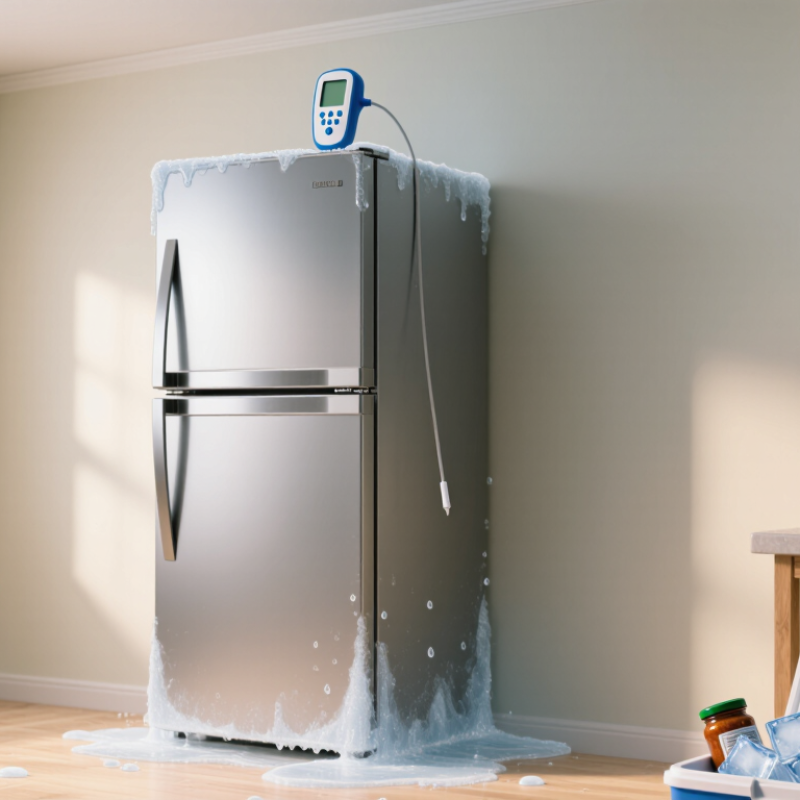
How Long Can a Fridge Last Without Power 7 Best Tips?

How Long a Fridge Can Stay Cold Without Electricity

A refrigerator can usually stay cold for about four hours without electricity, if the door remains closed. This estimate assumes a normally working, properly loaded appliance. A full freezer may hold a safe temperature for about 48 hours. A half-full freezer usually lasts around 24 hours. These times are practical guidance, not guarantees. Room temperature, insulation, food volume, and door openings can change everything.

Keep the door shut. Check the internal temperature with a food thermometer when power returns. Perishable food should remain at or below 40°F (4°C). If it has stayed warmer for over two hours, discard it, even if it looks or smells normal. During very hot weather, the safer limit may be one hour. I once trusted a cool container by touch, but that was a poor test. Cold hands cannot measure food safety.

Tips: Freeze water containers before outages and place them inside the refrigerator or freezer. Grouping food together helps it stay colder longer. Move dairy, meat, and leftovers into an insulated cooler with ice when needed. Avoid opening the freezer repeatedly to “check” the food. Keep a thermometer inside, since appearance can mislead you. Record the outage time on paper. That small detail helps you judge the risk later. If uncertain, throw it out. Waste is frustrating, but illness is worse.

Factors That Determine Food Safety During a Power Outage

How Long Can a Fridge Last Without Power? 7 Best Tips

Factors That Determine Food Safety During a Power Outage

A closed refrigerator usually keeps food cold for about four hours. That estimate changes with room temperature, door openings, and how full the shelves are. A packed fridge holds cold longer than an almost empty one. Keep the door shut. Every opening allows warm air inside.

Use a refrigerator thermometer when possible. Food should remain at 40°F (4°C) or below. Perishable food becomes risky after two hours above that temperature. In rooms above 90°F (32°C), the limit drops to one hour. Meat, seafood, eggs, milk, and cooked leftovers need the most attention. Food may look normal and still contain harmful bacteria. Do not taste it to test safety.

A full freezer can stay frozen for roughly 48 hours, while a half-full freezer may last about 24 hours. Ice crystals suggest that food may still be safe to refreeze, but quality can decline. Place unopened ice or frozen gel packs inside if available. Raw meat should remain sealed below other foods, preventing leaks after thawing. I sometimes want to trust smell alone, but that judgment is unreliable. When the outage time is unclear, throwing away high-risk food is the safer choice. A written temperature note can prevent guesswork later.

How Long Can a Fridge Last Without Power? 7 Best Tips and Food-Safety Factors During a Power Outage
Safety Factor or Tip Verified Time or Temperature What It Means Recommended Action
1. Keep the refrigerator door closed About 4 hours An unopened refrigerator can generally keep food at a safe temperature for approximately four hours, depending on room temperature, insulation, and how full it is. Avoid opening the door unless necessary. Move vulnerable foods to a cooler with ice as soon as possible if the outage may last longer.
2. Know the food-safety temperature limit 40°F or below (4°C or below) Refrigerated perishable foods should be kept at or below 40°F (4°C). Bacteria can multiply rapidly above this temperature. Use a refrigerator thermometer to check the actual temperature rather than relying only on how cold the food feels.
3. Apply the two-hour rule More than 2 hours above 40°F (4°C) Perishable foods such as meat, poultry, seafood, eggs, milk, soft cheese, and cooked leftovers may become unsafe after spending more than two hours in the danger zone. Discard questionable perishables. If the surrounding temperature is above 90°F (32°C), use a stricter one-hour limit.
4. Check freezer holding time About 48 hours when full; about 24 hours when half full A full, unopened freezer retains cold longer than a partially filled freezer because the frozen food helps maintain the temperature. Keep the freezer closed. Group frozen items together and add dry ice or bagged ice only when it can be handled safely and ventilation is adequate.
5. Use ice and coolers strategically Maintain 40°F (4°C) or below Ice, frozen gel packs, and insulated coolers can slow warming and protect high-risk foods during a prolonged outage. Pack food tightly, place a thermometer inside the cooler, keep it shaded, and drain meltwater when needed to prevent cross-contamination.
6. Evaluate frozen food after power returns Ice crystals or 40°F (4°C) or below Food that still contains ice crystals or has remained at 40°F (4°C) or below can generally be refrozen or cooked promptly, although quality may decline. Discard food that has an unusual odor, color, texture, leaking package, or evidence of prolonged warming. Never taste food to determine whether it is safe.
7. Prioritize high-risk foods Highest risk: meat, poultry, seafood, dairy, eggs, and leftovers Moist, protein-rich, and ready-to-eat foods support bacterial growth more readily than many shelf-stable foods. Consume or protect these foods first. Uncut fruits and vegetables, bread, hard cheeses, butter, and unopened shelf-stable products usually have lower immediate risk.
Room temperature and refrigerator fullness Affects cooling duration A full refrigerator retains cold longer, while a hot room, frequent door opening, and warm food loads shorten the safe holding period. Do not add hot food during an outage. Keep the appliance in the coolest available location and minimize door openings.
Power restoration does not reset the safety clock Time and temperature exposure still count Cooling food again does not reliably destroy toxins or reverse unsafe temperature exposure. When in doubt, throw it out. Do not depend on smell, appearance, or taste because harmful bacteria may be present without obvious warning signs.

How to Check Whether Refrigerated Food Is Still Safe

When power fails, food safety depends on time, temperature, and handling—not smell alone. The USDA advises keeping an unopened refrigerator cold for about four hours. A full freezer can hold its temperature for 48 hours, while a half-full freezer lasts about 24 hours (USDA Food Safety and Inspection Service). Keep the door closed. Every opening releases cold air.

To check refrigerated food, use a refrigerator thermometer, not your nose or taste buds. The FDA uses 40°F (4°C) as the key cold-storage limit. Perishable food above that temperature for two hours should be discarded. The limit drops to one hour when room temperature exceeds 90°F (32°C) (FDA, Refrigerator and Freezer Storage Chart). Check door shelves and the warmest areas first. Leaking raw meat deserves special caution.

If no temperature reading exists, use the clock conservatively. Ice crystals may show frozen food stayed cold, but they do not prove safety. Never taste questionable food. That shortcut can cause illness. Separate raw meat from ready-to-eat items, discard swollen packages, and clean spills with hot, soapy water. I would rather waste one container than gamble on a child’s lunch. Still, judgment can fail when outage times are uncertain. Write the estimated shutdown time down. Record temperatures when power returns.

Seven Practical Tips to Keep a Fridge Cold Longer

A refrigerator usually stays safe for about four hours without power when unopened. Keep the door shut, even for quick checks. Cold air escapes faster than most people expect. Move meat, milk, and eggs into the freezer if an outage seems likely. A full freezer can hold safe temperatures for about 48 hours, while a half-full freezer lasts roughly 24 hours. Keep food grouped together, because packed items retain cold better. Add frozen water bottles or ice packs around highly perishable food. Leave some space for air circulation. Small details matter.

Place an appliance thermometer inside the refrigerator before trouble starts. Keep the refrigerator at 40°F (4°C) or below, and the freezer near 0°F (-18°C). Check the temperature only when necessary. Wipe condensation from the door seal, then confirm it closes tightly. Keep the refrigerator away from direct sunlight and hot cooking equipment. After power returns, inspect food carefully. Discard items that smell strange, feel warm, or remained above 40°F too long. When uncertain, throw them away. That feels wasteful, but guessing can be worse. I once opened a fridge repeatedly during an outage, thinking brief checks were harmless. They were not.

When to Discard Food and Restore Refrigerator Safety

How Long Can a Fridge Last Without Power? 7 Best Tips

When the power fails, keep the refrigerator door closed. An unopened fridge usually keeps food cold for about four hours. A full freezer can remain safe for roughly 48 hours, while a half-full freezer lasts about 24 hours. These limits assume the door stays shut and the room is not unusually hot. Use a food thermometer when power returns. Safe refrigerator temperature is 40°F (4°C) or lower.

Tips: Do not taste food to test safety. Discard meat, seafood, eggs, milk, cooked dishes, and cut fruit left above 40°F for over two hours. The limit drops to one hour when temperatures exceed 90°F (32°C).

Throw away food with a strange smell, leaking package, or unusual texture. Still, smell alone cannot prove safety. I once underestimated a quiet freezer because the food looked normal. That was not a reliable judgment.

Move safe food into a cooler with plenty of ice. Keep raw meat sealed below ready-to-eat items. Frozen food with ice crystals may be refrozen, although its texture can suffer. When cleaning begins, remove spoiled items while wearing gloves. Wash shelves and drawers with hot, soapy water, then dry them fully. Check the appliance thermometer after restoring power. If the temperature remains high, or the outage duration is uncertain, discarding questionable food is the safer choice. A small loss is frustrating. Foodborne illness is worse.