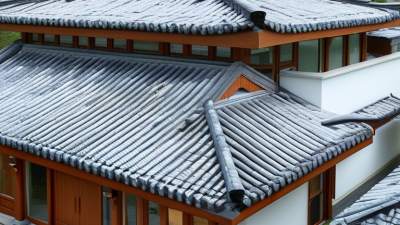
Choosing China’s best clay roof tiles supplier requires more than comparing catalog prices. Global buyers need evidence of durability, manufacturing control, export experience, and dependable communication. The International Energy Agency and UNEP reported in the 2023 Global Status Report for Buildings and Construction that buildings represented about 30% of global final energy demand and 26% of energy-related emissions in 2022. This context makes long-life roofing materials increasingly relevant. Clay roof tiles can support durable building envelopes, but performance depends on firing quality, installation, climate, and maintenance.
A credible Chinese supplier should provide factory audit records, product test reports, batch traceability, and clear packaging specifications. Buyers should examine water absorption, breaking strength, dimensional tolerance, frost resistance, and color consistency. ASTM C1167 and EN 1304 offer useful technical reference points for evaluating clay roofing products. The Tile Roofing Industry Alliance also recognizes tile roofing as a long-service roofing option when correctly designed and installed. Still, laboratory results are not enough. A tile that survives testing may fail after poor pallet protection, rough handling, or unsuitable fixing details.
The best supplier is rarely the cheapest one. Details matter. Request recent project references from similar climates, not only polished showroom photographs. Compare sample tiles under natural light, especially when roof colors must match across large developments. Ask how the factory manages kiln temperature, rejects, replacement claims, and custom profiles. Industry data can guide decisions, but it cannot replace direct verification. My assessment may remain imperfect because supplier capability changes over time. That is why independent inspection, pre-shipment checks, and written quality terms should remain central to any responsible sourcing plan.
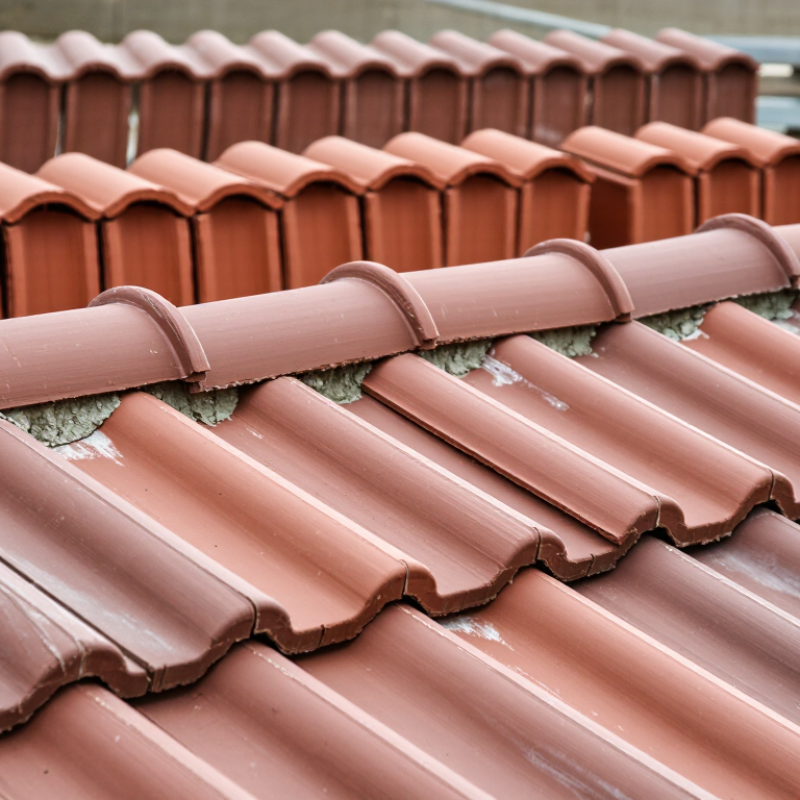
A leading clay roof tile supplier in China offers more than attractive samples. The supplier should explain clay sources, firing temperatures, water absorption, and freeze-thaw performance clearly. These details affect service life, especially in regions with heavy rain, snow, or strong sunlight. Experienced suppliers usually provide test reports, production records, and consistent dimensional data. Ask for current samples, not only catalog photographs. Tiles can look similar online but perform differently on a roof.
Reliable production also depends on quality control. Inspectors should check warping, cracks, color variation, surface finish, and interlocking accuracy during production. Strong packaging matters too. Well-designed pallets and moisture-resistant protection reduce breakage during long-distance transport. Clear communication is another practical sign of professionalism. A capable supplier confirms roof pitch, tile coverage, accessory requirements, loading limits, and delivery terms before production begins. Mistakes still happen. The important point is whether the supplier records them and responds with evidence.
Tips: Request a small sample batch before placing a large order. Measure tile dimensions and check fitting on a mock roof. Compare test results with your local climate requirements. Ask how rejected tiles are separated and documented. Do not choose only by the lowest quotation. A lower price may hide weaker firing, thinner tiles, or higher replacement costs. Also, review factory experience with similar projects, but remain critical. Past experience helps, yet it never guarantees every future batch will be identical.
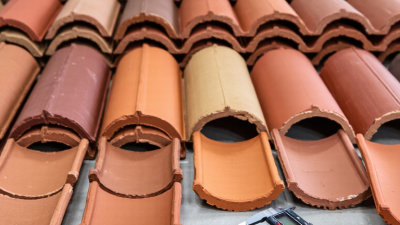
Chinese clay roof tiles begin with carefully selected natural clay, often mixed with sand or finely ground fired clay. Workers remove stones, adjust moisture, and knead the material until its texture becomes even. The mixture then rests before forming. This pause matters. It reduces internal stress and helps limit cracking during firing.
Factories form tiles by pressing, extruding, or shaping them in molds. Traditional curved tiles show hand-finished edges, while machine-pressed tiles offer more consistent dimensions. After forming, the pieces dry slowly in controlled air. Fast drying can create warping or hairline fractures. Kiln firing usually reaches temperatures above 1,000°C, although the exact temperature depends on the clay body and tile design. Experienced quality teams check water absorption, dimensions, surface defects, and breaking strength.
For global buyers, classification commonly includes flat, curved, interlocking, ridge, and decorative tiles. Tiles may also be grouped by surface treatment, such as natural terracotta, engobed, or glazed finishes. Natural tiles display varied red, brown, and charcoal tones because mineral content changes across clay deposits. Glazed tiles provide stronger color control, but buyers should verify glaze durability and local environmental suitability. Classification is not perfectly uniform between factories. A “frost-resistant” description can also mean different things without test data. I would request inspection reports, sample batches, pallet photos, and written tolerances before approving a shipment. Small details matter. One uneven locking edge can complicate installation across an entire roof.
China Best Clay Roof Tiles Supplier for Global Buyers? Which Quality Standards Matter to Global Buyers?
Global buyers should judge clay roof tiles through measurable performance, not catalog photographs. EN 1304 covers dimensions, shape, mechanical strength, and durability for clay roofing products. ASTM C1167 offers a comparable specification framework for clay roof tiles in North American projects. Testing should include water absorption, frost resistance, breaking strength, and dimensional consistency. A small size variation can create uneven roof lines and installation delays.
Ask for recent laboratory reports under ISO/IEC 17025 accreditation. Also request production-batch traceability, kiln temperature records, and inspection samples from the actual shipment. ISO’s 2022 Survey recorded more than 1.2 million ISO 9001 certificates worldwide, showing the system’s broad adoption. Yet certification alone proves little. A supplier may hold a valid certificate while controlling critical defects poorly. That uncomfortable point deserves attention.
Environmental evidence also matters. The 2023 Global Status Report for Buildings and Construction reported that buildings represented 37% of global energy-related and process emissions. Buyers can request an Environmental Product Declaration based on ISO 14025 and EN 15804. It should disclose firing energy, transport assumptions, and declared product impacts. Compare the same functional unit. Otherwise, the numbers mislead.
Fire classification, wind resistance, and local code compliance must be checked for each project. CE marking may apply in certain markets, but it is not a universal quality guarantee. The best evaluation combines standards, independent testing, factory experience, and shipment-level evidence. Even then, clay remains a natural material. Color variation is normal, and perfect uniformity may be an unrealistic expectation.
This standards-coverage chart highlights the main quality areas addressed by widely referenced documents. A value of 1 means the topic is explicitly addressed; 0 means the document is primarily a test method rather than a complete roof-tile product specification.
Global buyers should normally verify product requirements under EN 1304 or ASTM C1167, then use relevant test methods such as ISO 10545-3 where applicable. Always confirm the latest edition, local building-code requirements, frost exposure, wind conditions, and project-specific test reports before purchase.
China Best Clay Roof Tiles Supplier for Global Buyers?
Buyers should compare landed cost, not factory price. A quotation may show 8 dollars per square meter, but freight, insurance, pallets, duty, breakage, and local delivery can change the result. Request pricing under the same Incoterm and quantity. Ask for tile weight, coverage per square meter, minimum order, lead time, and replacement terms. It is easy to compare numbers. It is harder to compare assumptions.
Quality needs measurable evidence. Request test reports for water absorption, freeze-thaw resistance, dimensions, and breaking strength. EN 1304 provides a useful reference for clay roofing tiles, while ASTM C1167 may suit projects using American specifications. Ask whether reports cover the exact model, not a similar sample. The 2024 Global Status Report for Buildings and Construction states that buildings use about 32% of global energy and create roughly 34% of global emissions. Durable tiles can support longer service life, but durability claims still need evidence.
Customization should be priced in detail. Confirm color consistency, surface finish, ridge tiles, corner pieces, ventilation parts, logos, molds, and sample approval. A new mold may require a separate fee and several weeks. Service quality appears in small details: English drawings, packing photos, loading records, and response time after shipment. I would not trust the cheapest offer alone. My own comparison may still miss local installation costs, especially on complex roofs. Ask for a full bill of materials and a landed-cost worksheet before deciding.
Choosing a China-based clay roof tiles supplier requires more than comparing unit prices. Buyers should verify production capacity, export experience, and documentation before placing an order. Ask for recent loading photos, factory inspection records, product specifications, and test reports. Tile dimensions, water absorption, frost resistance, and color variation should match the project requirements.
Packaging deserves close attention. Clay tiles can crack when pallets shift inside a container. Request reinforced pallets, edge protection, moisture-resistant wrapping, and a clear loading plan. Confirm the number of tiles per pallet and the container’s usable volume. A small packing mistake can create expensive losses. Pre-shipment inspection is wise, although it cannot replace careful unloading checks at destination.
Freight terms must be written clearly. Confirm whether the quotation uses EXW, FOB, CIF, or another Incoterm, and identify which party pays inland transport, insurance, port charges, and customs fees. Verify the correct HS classification with a licensed customs broker, because duty rates differ by country. Commercial invoices, packing lists, certificates of origin, and shipping documents should use consistent descriptions. Check destination building rules too. Some markets require specific fire, frost, or environmental documentation. Delivery estimates can also be optimistic. Allow time for production delays, port congestion, customs review, and possible tile replacement. A lower price may still be costly when the schedule slips.